The complete Copenhagen ghost guide
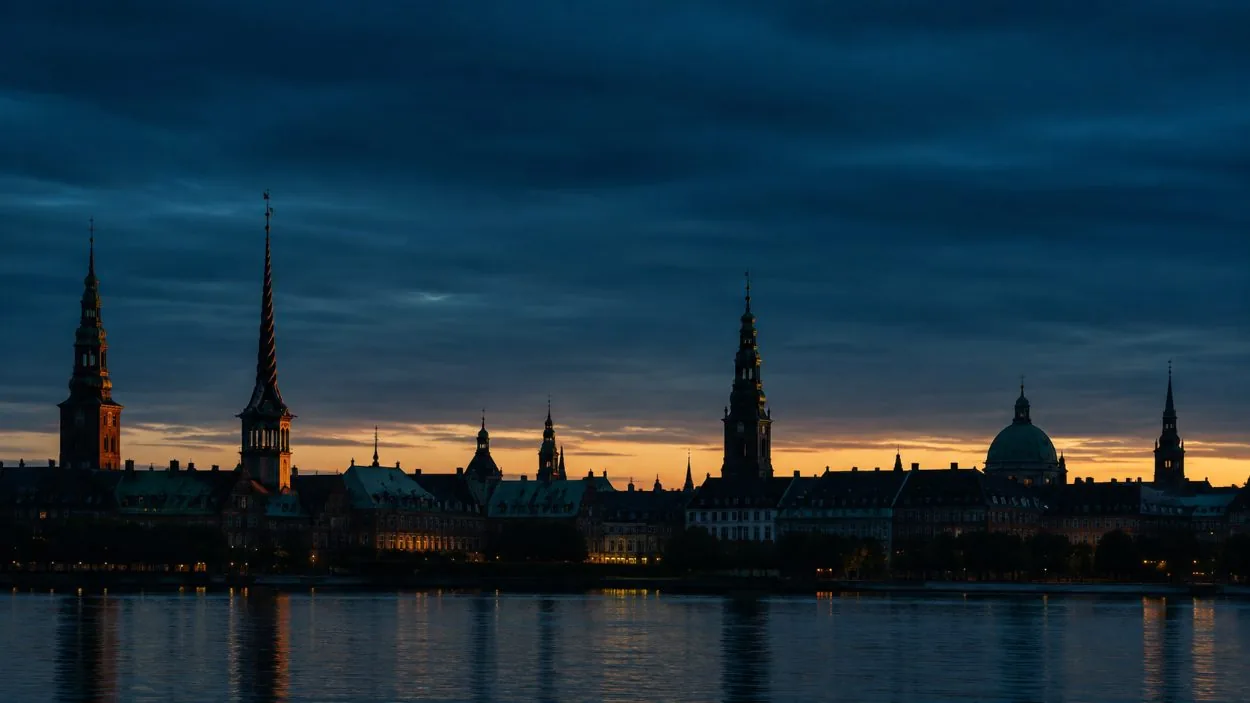
A ghost walk in Copenhagen is 1 hr 30 on foot through about a kilometre of the old city, starting on the square where the scaffold stood and ending beside the restaurants at Nyhavn. There is one of them in English. What decides whether you enjoy it is not the guide or the stories but the month, because in June the sun does not set until 9:57 pm and the walk happens in broad daylight.
A very safe city with a very bad record
Copenhagen ranked first in the Economist Intelligence Unit’s Safe Cities Index in 2021, and the Danish murder rate was 0.8 per 100,000 in 2018. None of that is the reason the history lands; it is the reason it lands harder. The plague of 1711 killed about 20,000 of the city’s 66,000 people, with mass graves being dug by August. The fire of 20–23 October 1728 took 47% of the medieval core and 35,000 volumes of the University library held at the Round Tower; the fire of 5 June 1795 took 909 more houses. In September 1807 the Royal Navy fired 300 Congreve rockets into the city, killed about 195 civilians, and used the tower of the Church of Our Lady for range practice until the cathedral burned down. In 1853 cholera produced 4,737 deaths between June and October. Read those separately at the plague of 1711, the fire of 1728, the bombardment of 1807 and the cholera year.
What a Copenhagen ghost walk is, and is not
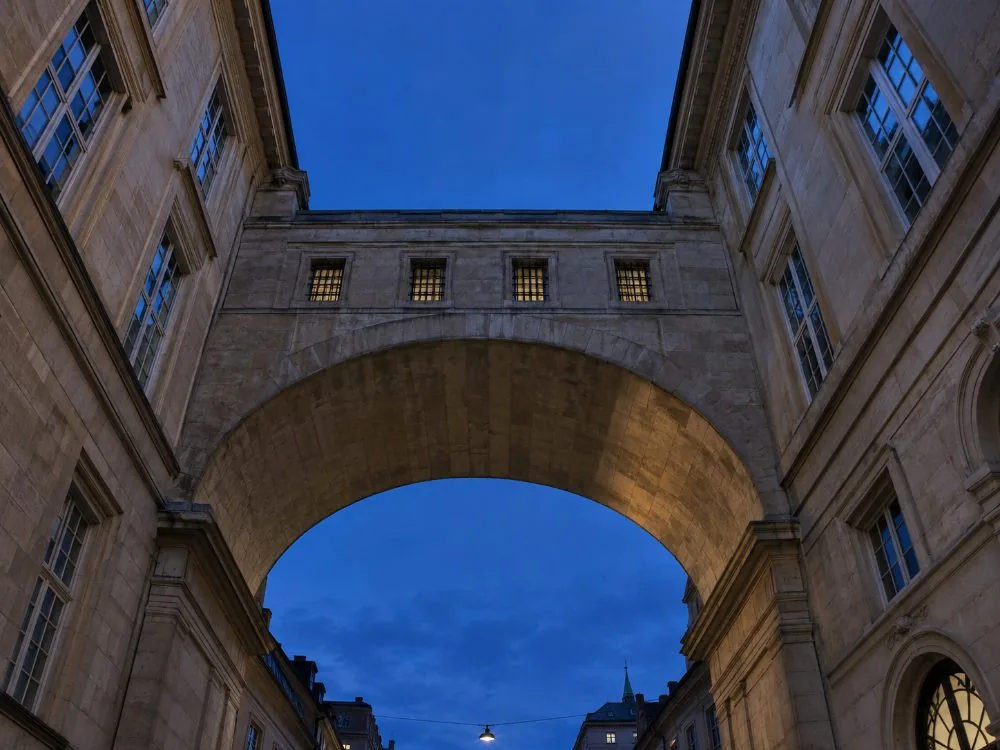
It is a storytelling walk. The operator behind it has been running since 2004 and says plainly that there are “no special effects nor elaborate props”; the guide wears a black cloak and carries a lantern, and that is the extent of the theatre. Nobody jumps out at you. You stand on Nytorv, laid out in 1610, which carried a permanent execution scaffold from 1627 until 1761 and saw its last beheadings in 1758. You look at the court house C.F. Hansen built between 1803 and 1815 and the arch that carried prisoners across the street to it. You hear about Laksegade, where in September 1826 a building emptied as windows shattered — and, if the guide is good, you also hear that the police statement of 15 September 1826 confirmed the windows were broken from the outside, called the wilder accounts fabrication, and that nobody was ever charged.
That distinction is the thing worth turning up for. The scaffold, the fires, the cholera figures and the police day-book are documented. The cat said to haunt Rosenborg and the king said to walk Frederiksberg Palace as a small dog are stories people told, published as such by the national tourist board. A walk that blurs the two is a worse walk. See what to expect and the haunted places themselves.
The daylight problem, month by month
This is the part nobody tells you before you book. On 21 June the sun rises at 4:25 am and sets at 9:57 pm — 17 hrs 32 min of daylight — and nautical twilight does not end until roughly 10:58 pm, later than any evening walk finishes. A June ghost walk is a daylight walking tour with dark material in it. By 1 October sunset is 6:47 pm; by the 15th, 6:12 pm; the clocks go back and by the 25th it is 4:48 pm, and on 31 October, 4:35 pm. Day length falls 2 hrs 13 min across that one month. On 21 December there are 7 hrs 6 min of daylight.
So the recommendation is October, honestly rather than for Halloween: the dark arrives at a civilised hour and January’s average of 1.4 °C has not. The walk runs in rain and cold either way. See when it gets dark, the best month and what to wear.
One walk in English, two in Danish
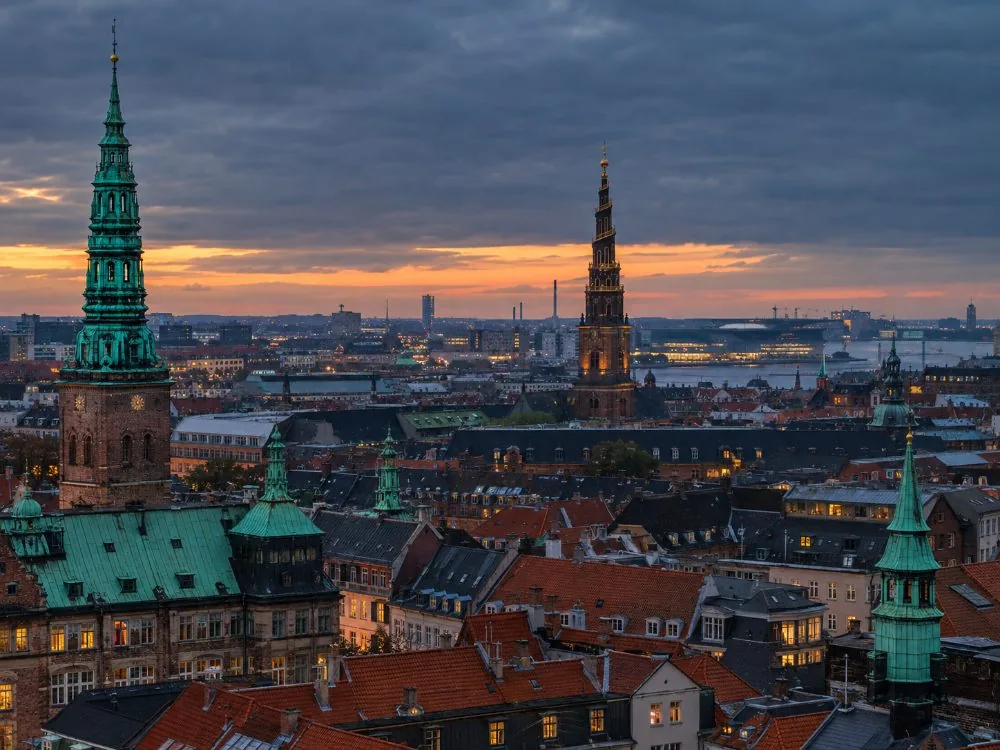
The English-speaking visitor’s options are narrow and it is better to know that now. One guided ghost walk runs in English, rated 5.0 from 14 reviews, on set evenings; a reviewer in August 2026 who otherwise enjoyed it noted there was only one date available in the whole month. After that come two self-guided murder hunts, in English or Danish, which you start when you like: an 1899 case around the Round Tower and Gammeltorv, and a nineteenth-century murder running from the pier past Skt Annæ Plads to Nyhavn. Both are analogue — paper and a pen, no phone — and both want a party of at least two.
The deeper walks are Danish only. One spends 75 minutes on the natmænd, who emptied latrines, removed carcasses and assisted the executioner, and were counted uærlige, dishonourable, which barred them from marrying into respectable families. The other spends 90 minutes on folk legends and where several Danish phrases come from. If you have a Danish-speaking friend, use them. See the English-language picture, guided against self-guided and the nightman’s tour.
Who should skip it
Anyone who wants to be frightened. This is a history walk with a lantern, and the operator says so. Anyone with children under seven, who are not admitted. Anyone who cannot stand and walk on cobbles for ninety minutes without a seat. Anyone visiting in June who will mind the daylight. And anyone whose evening has to be a fixed date, because the calendar is thin and it will not bend.
If that rules you out, the alternatives are real. The six forgotten giants is a four-hour daytime walk out of the city after Thomas Dambo’s wooden trolls, with transport and a meal, rated 5.0 from 138 reviews. Assistens Cemetery in Nørrebro, opened in 1760 for the poor and now 25 hectares holding Hans Christian Andersen, Søren Kierkegaard and Niels Bohr, asks only an afternoon. See which walk to choose, is it worth it and Assistens Cemetery.
Ready to pick a walk?
One free evening in English, in October: the guided ghost walk, booked as early as the calendar allows. A party of two to four who like puzzles: a self-guided hunt on your own schedule. A summer trip: the four-hour daytime walk after Thomas Dambo’s six giants, which loses nothing to the long light. The full decision is on which walk to choose, the honest English picture is on walks in English, and everything bookable is listed on the walks hub.
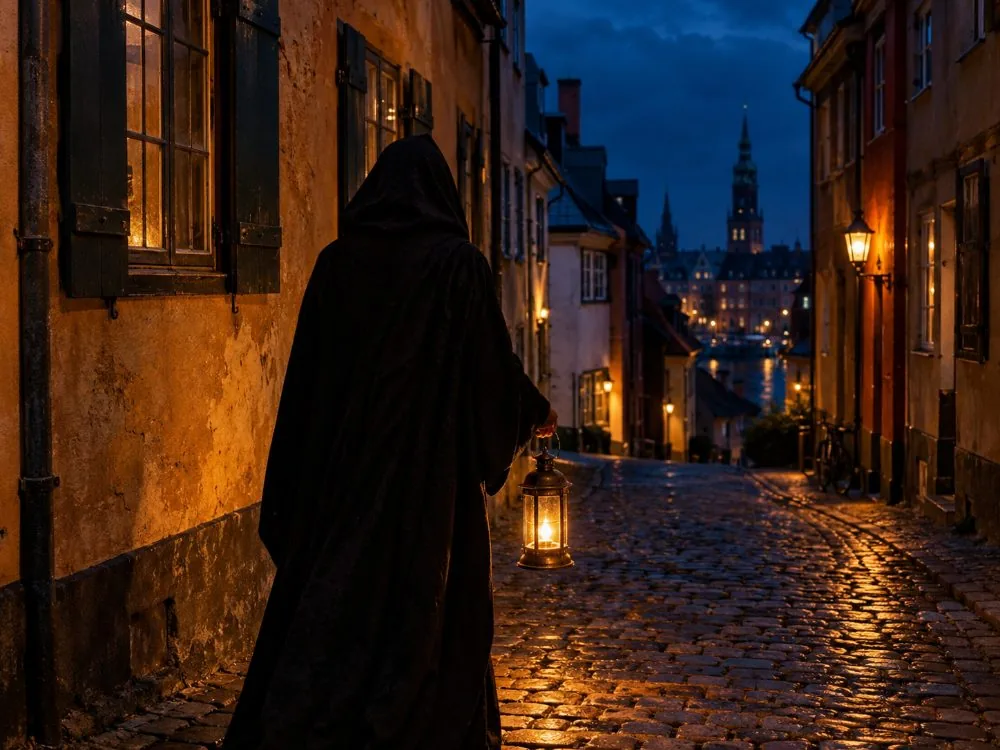 Lantern and black cloak
Copenhagen: Guided Ghost Walk through Haunted City
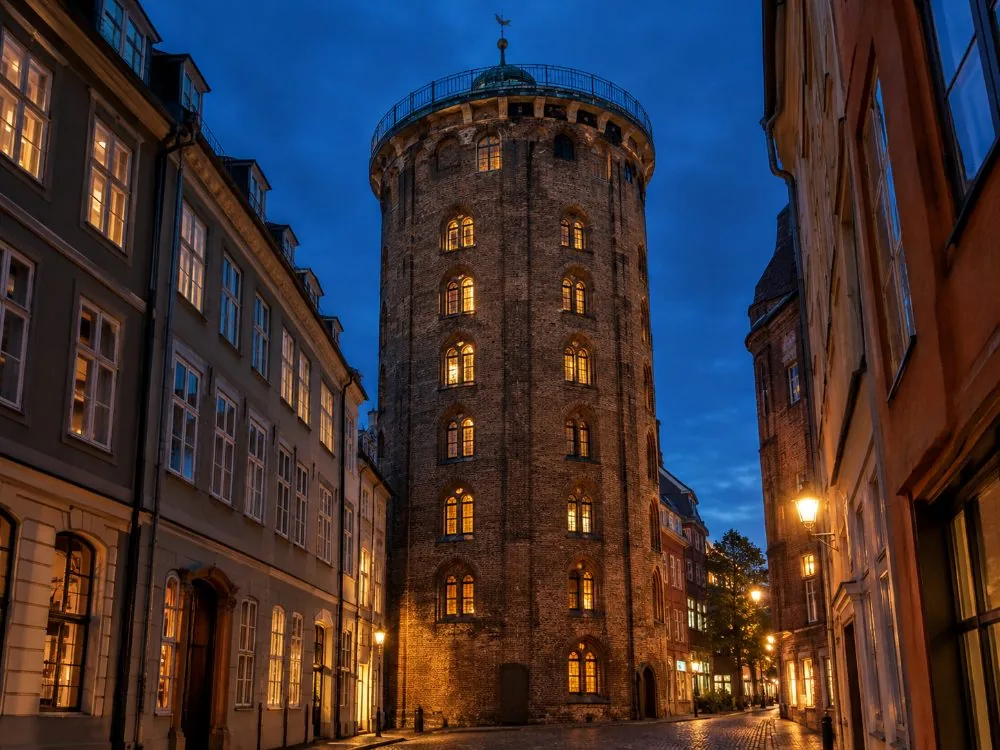 A killing in 1899
Copenhagen: Murder Mystery Hunt by The Round Tower
 Six trolls in the woods
Copenhagen: The Six Forgotten Giants Hunt and Nature Walk
The widget will tell you one thing faster than any page can: the guided walk runs on set evenings and the calendar is thin. A reviewer from the United Kingdom who enjoyed the walk in August 2026 still put the same complaint in writing — “the lack of choice for dates.. only one available for the whole month”. Look at the dates before you build an evening around it. The English-language picture is narrower than most capitals.
Frequently asked questions
Is there a ghost tour in Copenhagen in English?
One guided ghost walk, rated 5.0 from 14 reviews, running an hour and a half from Nytorv on set evenings, plus two self-guided hunts in English or Danish: the English-language picture.
When does it get dark enough for a ghost walk?
From late September, and properly from mid-October: sunset is 6:12 pm on 15 October and 4:35 pm on the thirty-first, against 9:57 pm on 21 June: the sunset table.
Is the Copenhagen ghost walk scary?
No. The operator uses storytelling with no special effects and no elaborate props. The frights in this city are Tivoli’s two haunted houses: Tivoli’s haunted houses.
Which stories are real and which are legends?
The executions, the fires, the cholera figures and the 1826 Laksegade police statement are documented. The Rosenborg cat and the Frederiksberg dog are legends published by the national tourist board: the haunted places.