Is Copenhagen a walkable city?
The scale of the old city
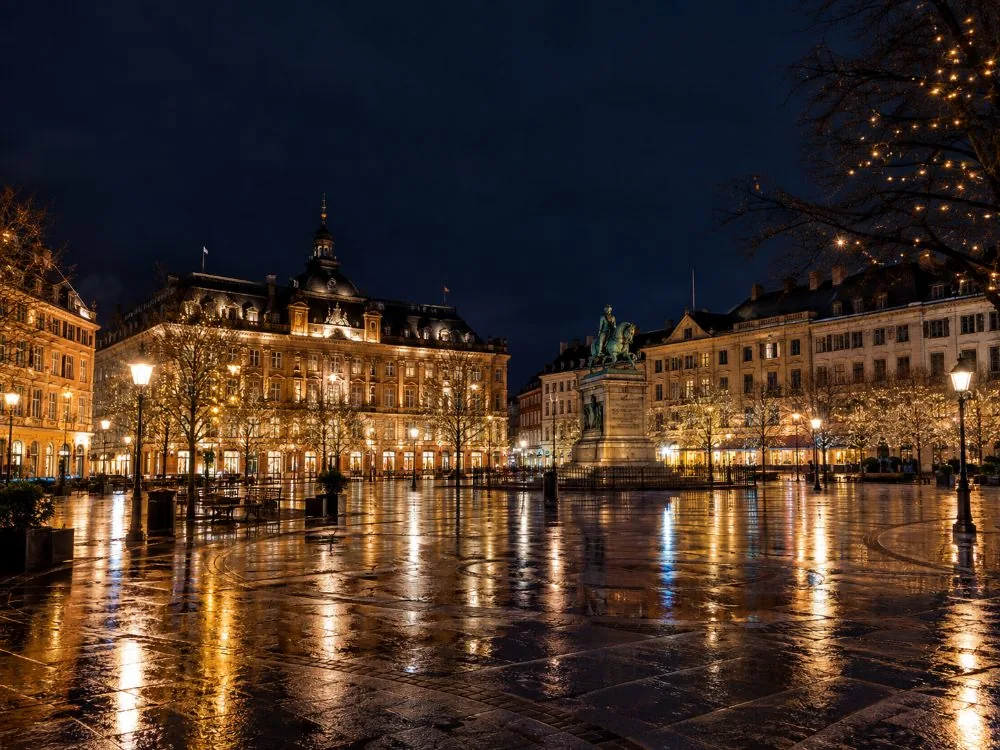
Everything the walks cover sits inside a small area. The guided ghost walk starts on Nytorv and finishes at Kongens Nytorv at the top of Nyhavn, covering roughly a kilometre in an hour and a half — and that hour and a half is mostly standing still, which tells you how short the distances are. The Round Tower hunt runs from Rundetårn through Gråbrødretorv, Købmagergade and Strøget to Vor Frue Kirke, Gammeltorv and Vor Frue Plads, and you can walk the whole of it in an afternoon at a stroll.
Strøget is the reason it feels this way. Pedestrianising 1.1 km of the centre in 1962 was an unusual thing to do at the time, and Jan Gehl’s study of what happened next became the basis of the policy that gave the city its pedestrian streets and its cycle lanes. The practical result is that you can cross the historic centre on foot without meeting much traffic: the Strøget page.
Cobbles, which are the real answer
Copenhagen is flat, which removes the usual complaint about walkable cities. What it has instead is stone. The squares and the older streets are cobbled, and in the dark, in the wet, that is the thing that will catch you out rather than any distance. Flat shoes with grip; see what to wear. If cobbles are a genuine difficulty rather than a nuisance, the access page is honest about what is known and what is not.
Walking at night
Copenhagen came first in the Economist Intelligence Unit’s Safe Cities Index in 2021, and Denmark ranked eighth in the Global Peace Index in 2025. The Danish murder rate was 0.8 per 100,000 in 2018. None of that makes any city crime-free, and the measured version of the question is on is Copenhagen safe. What it does mean is that walking back from Kongens Nytorv at nine in the evening is an ordinary thing to do, which is not true everywhere a ghost walk is sold.
What works
- The old city is small, flat and largely pedestrian
- Strøget runs 1.1 km through the middle of the ghost walk route
- The ghost walk covers about a kilometre in ninety minutes
- Both self-guided hunts are walkable routes with obvious landmarks
Worth knowing
- Cobbles everywhere in the old streets and squares
- Wet stone in the dark is the real hazard, not distance
- Cycle lanes are busy and cyclists have right of way in them
- The giants walk is out of the city and needs its own transport
Look before you step off a kerb. The cycle lanes here are a serious piece of infrastructure rather than a painted stripe, they run between the pavement and the road, and the traffic in them is fast and quiet. It catches visitors out far more often than the cobbles do.
What you do not need to walk to
The one walk on this site that is not within strolling distance is the four-hour trip after Thomas Dambo’s six wooden giants, which meets at Valdemarsgade in Vesterbro and then uses private transport to get out of the city, because the trolls are not in it. Everything else — Nytorv, the Round Tower, Højbro Plads, the University steps, the pier — is inside the centre. Meeting points in full are on where the walks start, and getting about after dark is covered on getting around Copenhagen.
How much walking is in a walking tour here
Less than you would guess. Ninety minutes, about a kilometre, with long stops. The self-guided hunts are longer in elapsed time because you set the pace, but they are not harder: you stop when you want, sit down when you want, and finish when you want. If distance is the question rather than surface, none of these is a demanding walk. How long each one takes.
 Lantern and black cloak
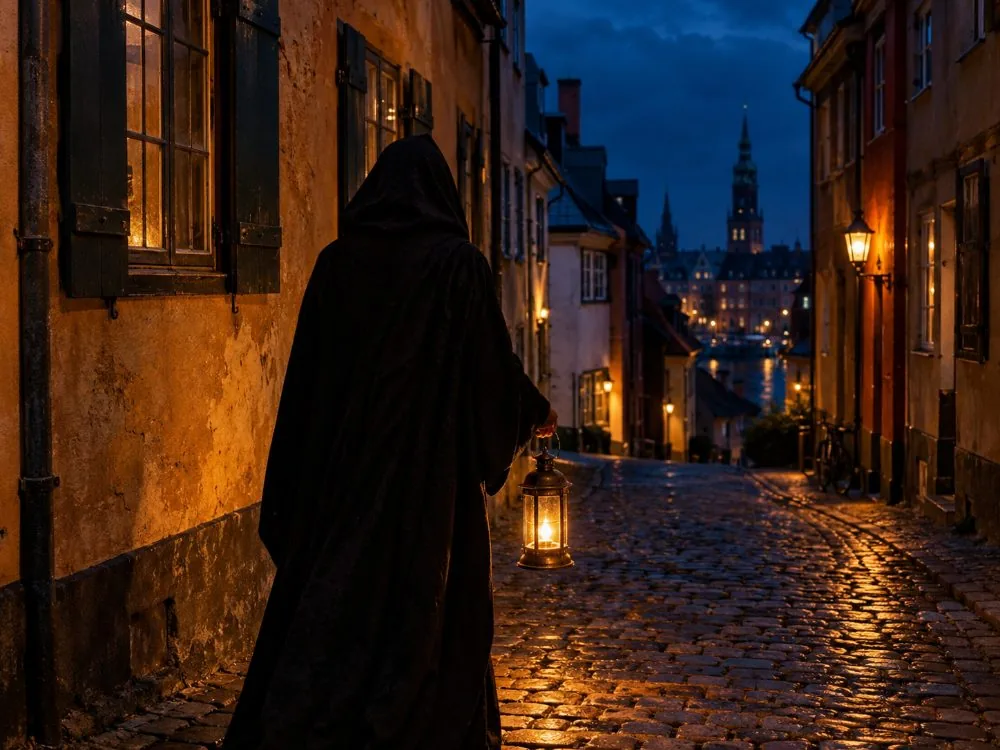
Copenhagen: Guided Ghost Walk through Haunted City
 A killing in 1899
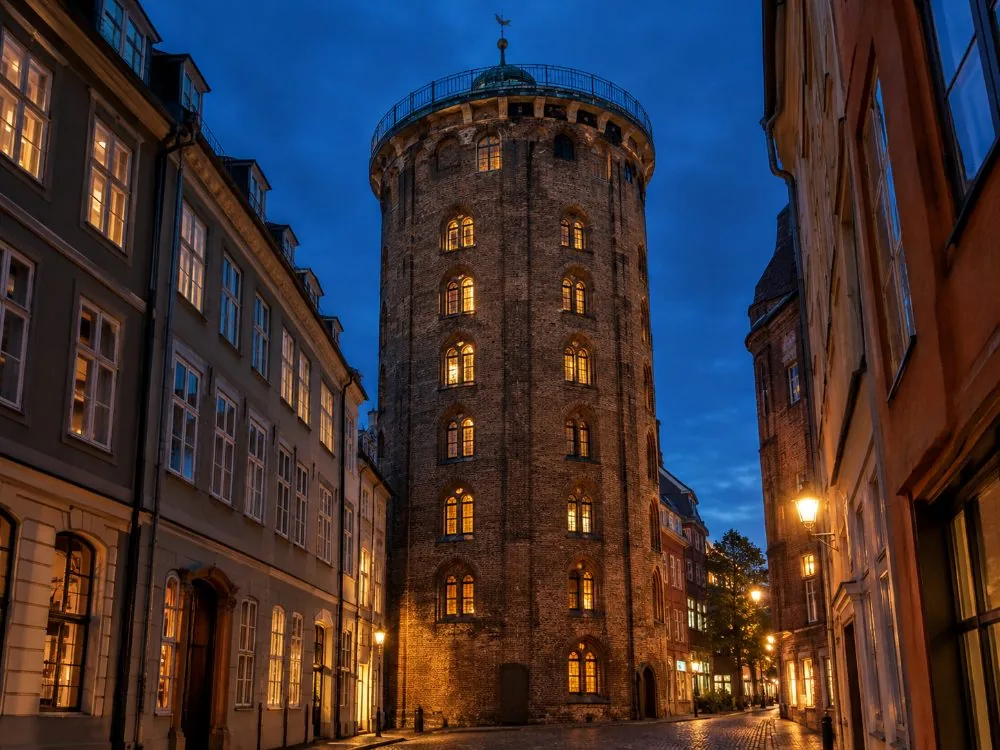
Copenhagen: Murder Mystery Hunt by The Round Tower
 Nineteenth-century murder
Copenhagen: Murder Mystery Hunt by Amalienborg Palace
Frequently asked questions
Is Copenhagen walkable for tourists?
Very. The old city is flat and compact, and Strøget was pedestrianised in 1962 at 1.1 km, running through Gammeltorv and Nytorv: the Strøget page.
How far does the ghost walk actually go?
About a kilometre, from Nytorv to Kongens Nytorv, over an hour and a half. Most of that time is spent standing still: what to expect.
Are the streets cobbled?
The squares and older streets are, and wet cobbles in the dark are the main hazard of an evening walk. Flat shoes with grip: what to wear.
Is it safe to walk in Copenhagen at night?
Copenhagen came first in the Safe Cities Index in 2021 and the Danish murder rate was 0.8 per 100,000 in 2018. The measured answer is on is Copenhagen safe.
Do I need transport for any of the walks?
Only for the four-hour giants walk, which supplies its own private transport out of the city: the giants page.