The folk legends walk, in Danish

The Laksegade case, which is the anchor
The Devil in Salmon Street is the best-documented legend in Copenhagen, and the documentation is what makes it good. In September 1826 the residents of Laksegade no. 210 — roughly today’s nos. 9 to 11 — fled the building as windows shattered and objects were reported flying through the air. On 15 September 1826 the police issued a public statement: windows had indeed been smashed from the outside, and the more sensational accounts were fabrication. The case was never solved.
What survives is not a ghost but a phrase. “Fanden er løs i Laksegade” — the Devil is loose in Salmon Street — is still ordinary Danish for all hell breaking loose. A poltergeist that failed to convince the police in 1826 and succeeded in entering the language is a better story than a haunting. The full account.
The other three
The walk also covers a widow buried alive, a bride whose anger darkened the sun, and the origins of several Danish expressions. These are legends, told as legends. Denmark has a long formal habit of collecting them: Just Mathias Thiele began systematically gathering Danish folk tales in 1817 and published Danske Folkesagn between 1819 and 1823, working from the Royal Library in Copenhagen, with Svend Grundtvig and Evald Tang Kristensen continuing after him. The stories on this walk belong to that tradition rather than to the police archive. Danish folklore creatures.
If the creatures are what you are after, the household nisse — no taller than a ten-year-old boy, grey clothes, pointed red cap, living in the loft and helpful as long as somebody leaves porridge with butter — is the one everybody knows, and the lygtemand, the small male figure seen at night in bogs and damp meadows and used by Hans Christian Andersen in his writing, is the one worth knowing.
Danish only, and what to do about it
There is no English version of this walk. The operator’s English product is the guided ghost walk, which covers the Laksegade episode among other things — one reviewer singled out “the Salmon Street episode” as the best part of it. So the legend itself is not out of reach in English; the ninety minutes built around Danish legend is. The honest English-language picture.
Included
- Ninety minutes on foot with a guide, in Danish
- A start in front of the University steps
- The Devil loose in Laksegade, told as legend
- A widow buried alive and a bride whose anger darkened the sun
- The origins of several Danish phrases
Not included
- Any English-language version — there is none
- Reviews: it is a new listing
- Documented history as the main course: this walk is about the stories
- Entry to any building, or food and drink
What works
- The legends are told as legends, which is rarer than it should be
- Ninety minutes, the same length as the English ghost walk
- The University steps is a central and unmissable meeting point
- Same operator as the 5.0-rated English walk
- The Laksegade material is genuinely well documented, right down to the police statement
Worth knowing
- Danish only, with no English alternative from this operator
- New listing, no reviews at all
- If you want documented history rather than legend, take the nightman’s walk
- Some of these stories exist only as stories, and the walk does not pretend otherwise
- Ninety minutes standing outdoors in a Danish autumn is a clothing decision
The police statement of 15 September 1826 is the useful document here. It conceded that windows in Laksegade had been broken from the outside and called the rest fabrication, and it did not close the case. That is the exact line this site tries to hold: the panic is recorded, the phrase survives, the Devil is a story people told.
Book the folk legends walk
Live availability is below. The same operator’s nightman’s tour runs 75 minutes in Danish on the natmænd, and the English walk is here.
If this one is not right
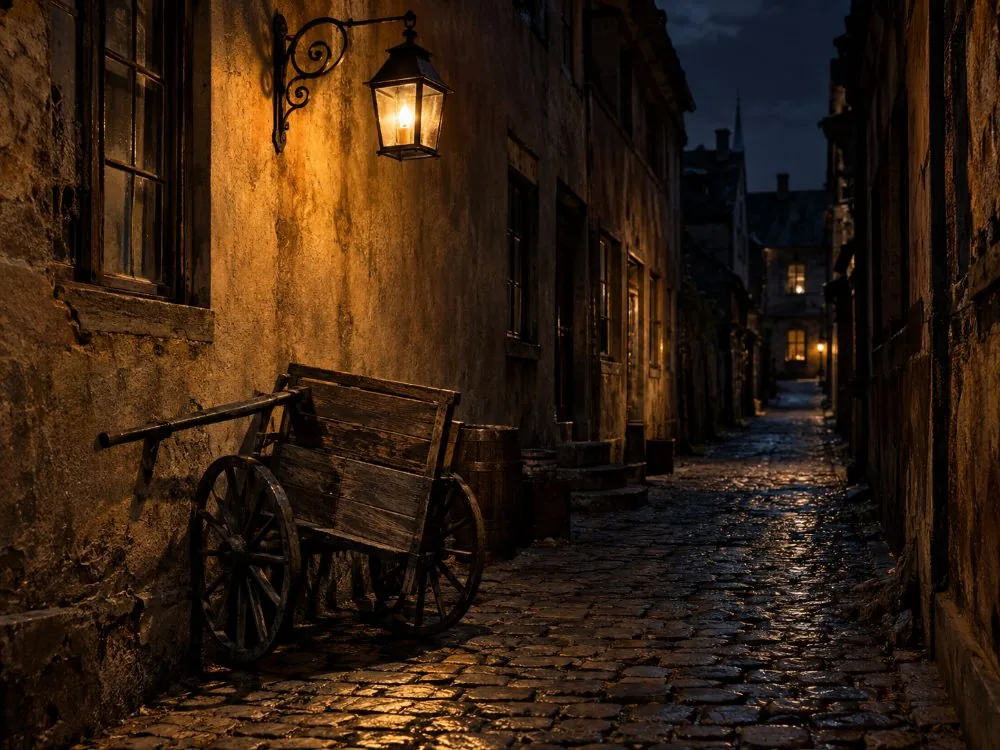 The city’s outcasts
Copenhagen: Nightman’s Tour in Danish
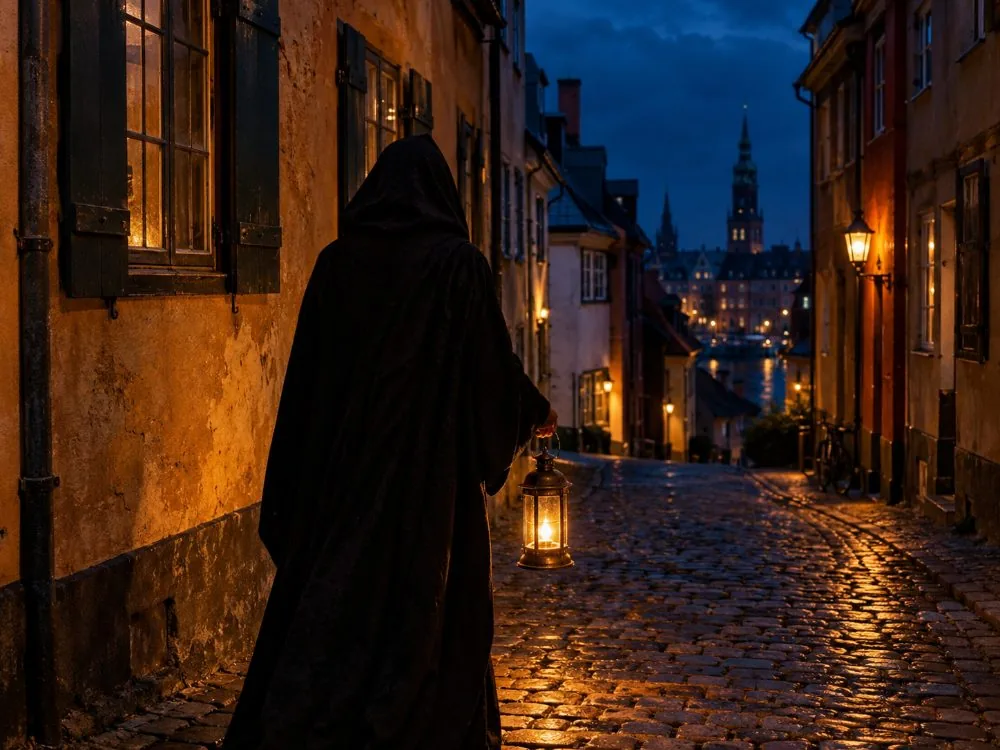 Lantern and black cloak
Copenhagen: Guided Ghost Walk through Haunted City
 Nineteenth-century murder
Copenhagen: Murder Mystery Hunt by Amalienborg Palace
Those dates don’t work?
The guided ghost walk runs on set evenings and sells out early in October. Browse what else is bookable in Copenhagen — the self-guided murder mysteries you can start whenever you like, and the daytime walks — and pick a date that suits you, with instant confirmation.
Frequently asked questions
Is the folk legends walk in English?
No, Danish only. The Laksegade story does come up on the English ghost walk, though — a reviewer named it as the highlight: the guided ghost walk.
What does “Fanden er løs i Laksegade” mean?
The Devil is loose in Salmon Street. It is still used in Danish for all hell breaking loose, and it comes from the 1826 panic in Laksegade: what happened.
Are the stories presented as true?
They are legends and this walk treats them as legends. The documented history — executions, fires, plague, cholera — is covered on the full guide.
Where does it start and how long does it take?
In front of the University steps, for 90 minutes: all the meeting points.