What a Copenhagen ghost walk is like

Before it starts
You gather on Nytorv in front of the court house. The operator has been running walks since 2004 and the guide is easy to find: black cloak, lantern, standing still while everybody else in the square is moving. Arrive a few minutes early rather than exactly on time — the group leaves together and the route does not double back. The precise meeting points for every walk on this site, including the ones in Danish, are on where the walks start.
The square you are standing on
Nytorv was laid out in 1610 under Christian IV. A permanent execution scaffold stood on it from 1627, rebuilt in 1728 as an octagonal masonry podium, and the last executions there were in 1758: Frederik Hammond and Anders Sundblad, beheaded for forging securities. The scaffold came down in 1761. The pillory outlasted it, and public branding and whipping continued on the square until 1780. When the city’s executions moved, they went to the old Svenske Skanse redoubt by Amagerport, where 35 people were put to death between 1806 and 1857, three of them women.
The court house you are looking at was built between 1803 and 1815 to C.F. Hansen’s neoclassical design, slowed by material shortages and by the British bombardment. It served as city hall and courthouse at once, and its jail stands beside it, joined by the large overhead arch that carried prisoners across the street. The inscription on the court house reads Med lov skal man land bygge; on the jail, For almeen sikkerheden. More on what happened on Nytorv.
The middle of the walk
The route moves through the old city on foot, between squares and narrow streets, and stops where something happened. Expect the fires: the one that began on 20 October 1728 and burned for three days, taking 47% of the medieval core, about 1,600 buildings, and 35,000 volumes of the University library along with instruments and records of Tycho Brahe and Ole Rømer held at the Round Tower. And the one that started around three in the afternoon on 5 June 1795 at the Navy’s old base and destroyed 909 houses.
Expect the plague of 1711, which killed about 20,000 of a city of 66,000 — almost a third of everyone alive here — reaching the city in July with mass graves being dug by August. Expect 1807, when the Royal Navy fired 300 Congreve rockets into a civilian city over three nights, killed about 195 people and injured 768, and used the tower of the Church of Our Lady for range practice until the cathedral burned to the ground.
And expect Laksegade, which is the story reviewers remember. In September 1826 the residents of number 210 — roughly today’s numbers 9 to 11 — fled as windows shattered and objects were reported flying through the air. The police statement of 15 September 1826 confirmed the windows had been broken from the outside and called the more sensational accounts fabrication. The case was never solved. What survives is a phrase Danes still use.
The measure of a guide on this walk is what they do with Laksegade. The poltergeist is rumour and always was. The panic, the broken glass, the police day-book entry of 15 September 1826 and the idiom that came out of it are all documented. A guide who tells you both is giving you something better than a ghost story, and the reviews suggest that is what happens.
How it ends
The walk finishes at Kongens Nytorv, at the top of Nyhavn. That is a useful place to be let go: the canal was dug between 1670 and 1673 under Christian V by Swedish prisoners of war from the Scanian War, to bring grain ships up to the market at Kongens Nytorv, and for most of the twentieth century it was a rough sailors’ quarter of pubs and tattoo parlours before commercial shipping ended in 1967. Hans Christian Andersen lived at three addresses along it and published his first fairy tales at number 20 in 1835. There is somewhere to eat within a minute of where the group breaks up: the Nyhavn page.
The practical shape of the evening
Included
- A guide, in English, for the full hour and a half
- A route of roughly a kilometre through the old city
- Stops where you stand still and listen
- Documented history, with the sources named
- Stories labelled as stories, if the guide is doing the job
Not included
- Any food or drink
- Seats — there are none on the route
- Special effects, props or actors
- Permission to record audio
- Admission to any building; the walk stays outdoors
What it is not
It is not a haunted house and it is not a theatre piece. Nobody will grab your arm. The operator puts it in writing — no special effects nor elaborate props — and that is worth trusting rather than testing. It is also not an indoor tour: you are outside for the whole ninety minutes, in whatever Copenhagen is doing that evening, which in October is dark and often wet. Read what to wear before you pick your shoes, and the access page if standing for ninety minutes is a question for you.
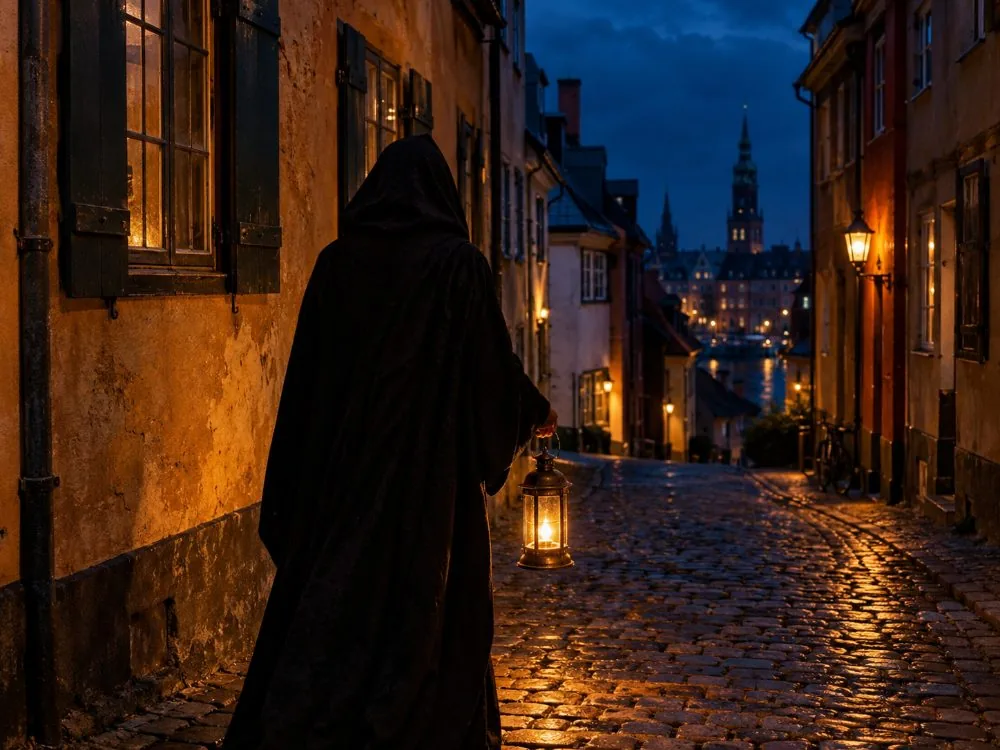 Lantern and black cloak
Copenhagen: Guided Ghost Walk through Haunted City
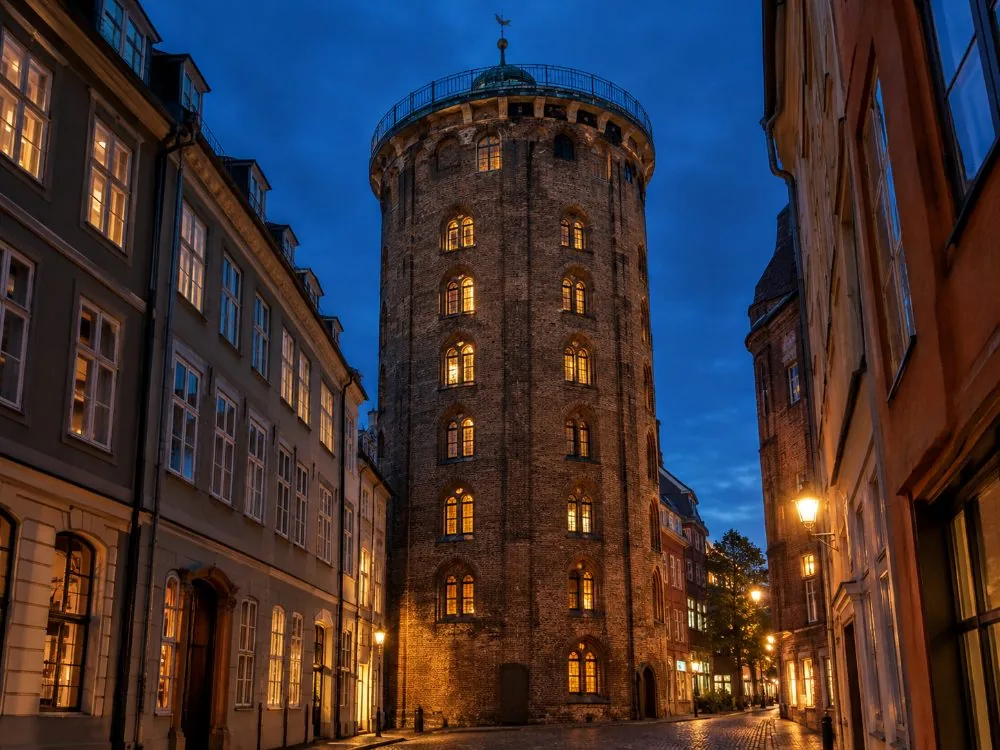 A killing in 1899
Copenhagen: Murder Mystery Hunt by The Round Tower
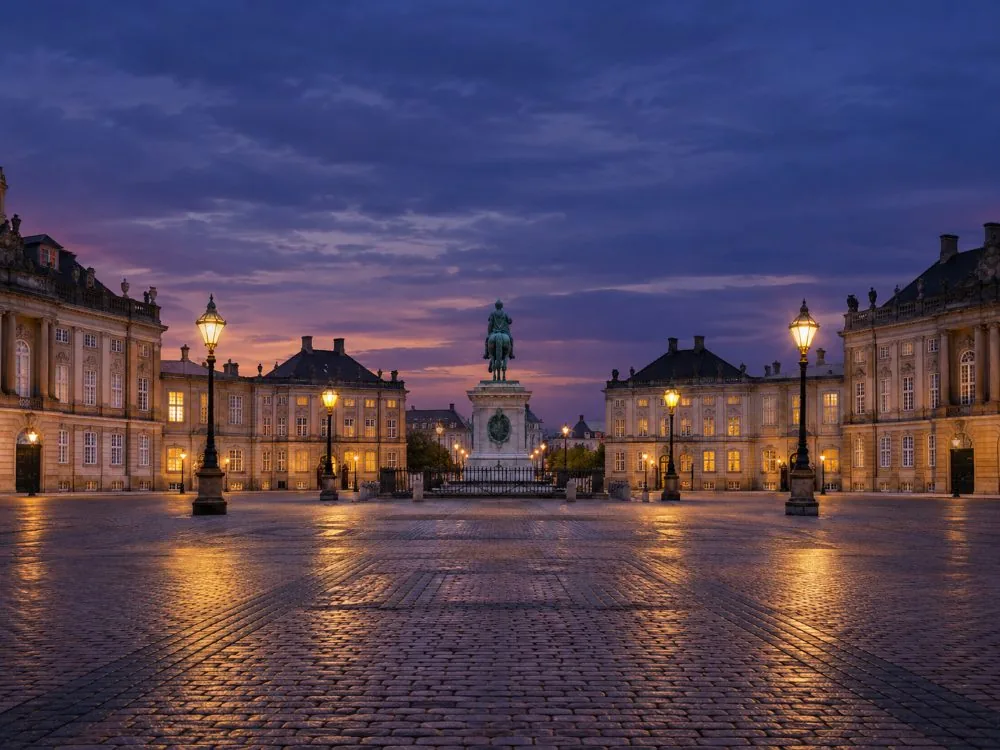 Nineteenth-century murder
Copenhagen: Murder Mystery Hunt by Amalienborg Palace
And check the month before you check anything else. On 21 June the sun sets at 9:57 pm in Copenhagen and nautical twilight runs to about 10:58 pm, so a summer ghost walk happens in daylight. On 31 October it is dark by half past four. The sunset table is the most useful page here.
Frequently asked questions
How long is the Copenhagen ghost walk?
An hour and a half on foot, starting at Nytorv and ending near Kongens Nytorv at the top of Nyhavn. Every walk on the site compared by length on how long each takes.
Does the tour go inside any buildings?
No. It is an outdoor walking tour through streets and squares, and it runs in rain and cold rather than moving indoors. Dress for the evening: what to wear.
Can I film or record the guide?
No, audio recording is not permitted on the guided ghost walk. Photographs of the buildings are another matter and the route passes several worth stopping for.
Where exactly does it start?
On Nytorv, in front of the court house, where the guide waits in a black cloak with a lantern. Meeting points for all six walks are on where the walks start.
Will I actually see anything ghostly?
No, and nothing on this site suggests you will. What you get is the history of a city that buried a third of its population in 1711 and burned twice, told where it happened: the haunted places.