The nightman’s tour, in Danish
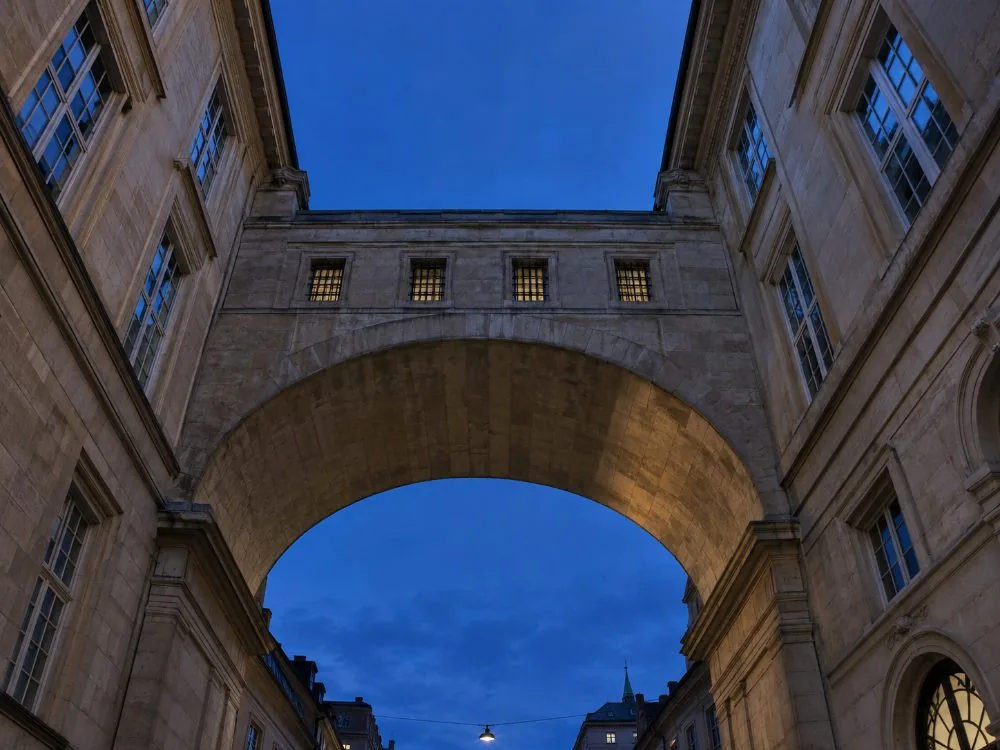
Who the natmænd were
The natmænd — also called rakkere, skøjere and kæltringe — did the work a town needs done and will not look at. They handled sanitation, removed dead animals and assisted the executioner. For three centuries that put them at the absolute bottom of Danish society. They were counted uærlige, dishonourable, because the work involved filth and carrion, and the stigma was hereditary in effect: it barred them from marrying into respectable families and shut them out of community life. What grew in that gap was a parallel society with its own rules and its own language. More on the nightmen.
The executioner’s assistant part of the job is not a metaphor. When Struensee and Enevold Brandt were executed on 28 April 1772, the sentence was a right hand severed, then beheading, then drawing and quartering. Somebody cleared that up. How executions worked in Denmark.
The ground it stands on
Højbro Plads, where the group meets, sits in the middle of the old city between the two squares that ran Copenhagen’s public punishment. A permanent scaffold stood on Nytorv from 1627 until 1761, and branding and whipping at the pillory continued until 1780. After that the city’s public execution ground moved out to the former “Svenske Skanse” redoubt by Amagerport — today’s Dalslandsgade 7 on Amager — where 35 people were executed between 1806 and 1857, three of them women. Amager Fælled held a separate execution site, whose last execution was on 22 April 1845. Two different places, often confused. Nytorv.
The trade did not end cleanly either. Denmark’s last public execution was in 1882 — Anders “Sjællænder” Nielsen, beheaded on Lolland, where the headsman needed several blows of the axe, which fuelled the campaign to abolish the death penalty. The last civil execution was Jens Nielsen, beheaded with an axe at Horsens prison on 8 November 1892. Civil capital punishment was abolished in 1933 and the death penalty left Danish law completely on 1 January 1994.
The language problem, said plainly
This walk is in Danish. There is no English version and this page is not going to imply there might be one. If you do not read Danish, the walk you can actually take is the guided ghost walk, and the English-language page sets out the full honest list. If you do read Danish, book this one over the English walk: 75 minutes on a subject nobody else covers is worth more than a general ghost tour.
Included
- Seventy-five minutes on foot with a guide, in Danish
- A start by the statue of Absalon on Højbro Plads
- The natmænd: sanitation, carrion, the scaffold and the stigma
- The same operator that runs the English ghost walk
Not included
- Any English-language option — see what runs in English
- Reviews: it is a new listing with none on the file yet
- Entry to any building
- Food or drink
What works
- A subject no other walk in the city takes seriously
- Seventy-five minutes is short enough to add to an evening that already has plans
- Højbro Plads is central, so nobody has to cross town to reach it
- Same operator as the 5.0-rated English walk, which is the only quality signal available
- Documented social history rather than ghost stories, if that is what you came for
Worth knowing
- Danish only. No English version exists
- A new listing with no reviews at all, so you are booking on the operator’s record
- The material is genuinely grim, and it is not dressed up
- Seventy-five minutes is the shortest walk here
- Nothing in it will frighten you in the way a ghost walk is meant to
The record is the reason to take this one. The stigma on the natmænd was not folklore — it was a category, uærlige, with consequences that show up in marriage records and in who was allowed into a guild. The ghosts on the other walks are stories people told. This is the part of the city’s past that left paperwork.
Book the nightman’s walk
Live availability is below. The same operator’s other Danish walk, the folk legends, runs 90 minutes from the University steps and covers the legends rather than the labour.
If this one is not right
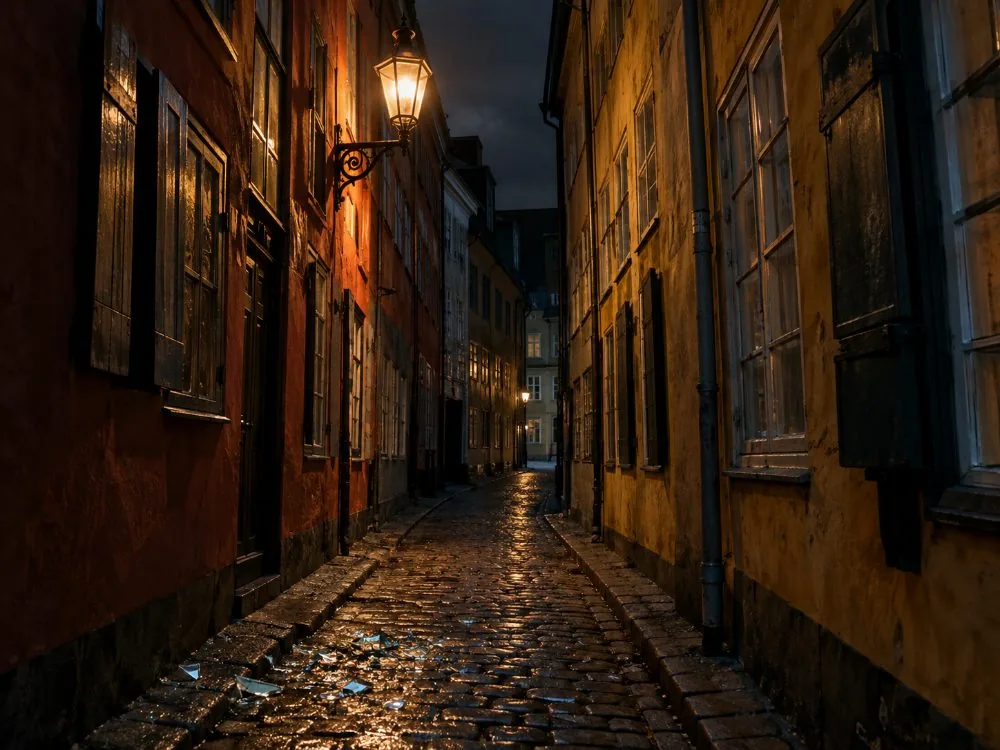 The Devil in Laksegade
Copenhagen: Guided Walking Tour of Folk Legends – in Danish
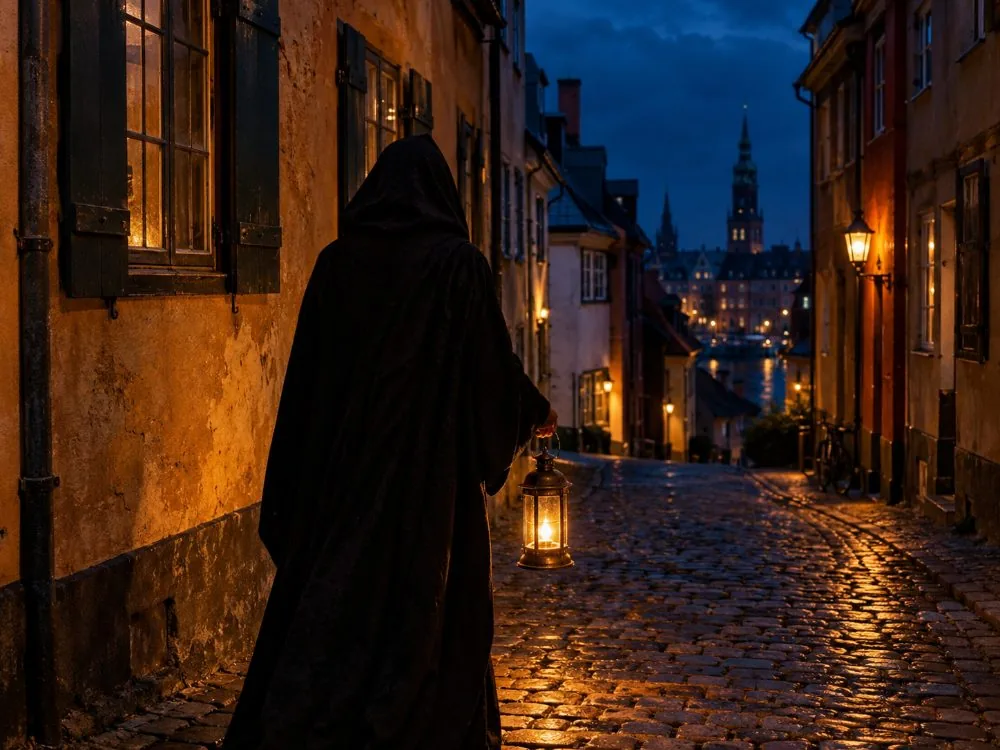 Lantern and black cloak
Copenhagen: Guided Ghost Walk through Haunted City
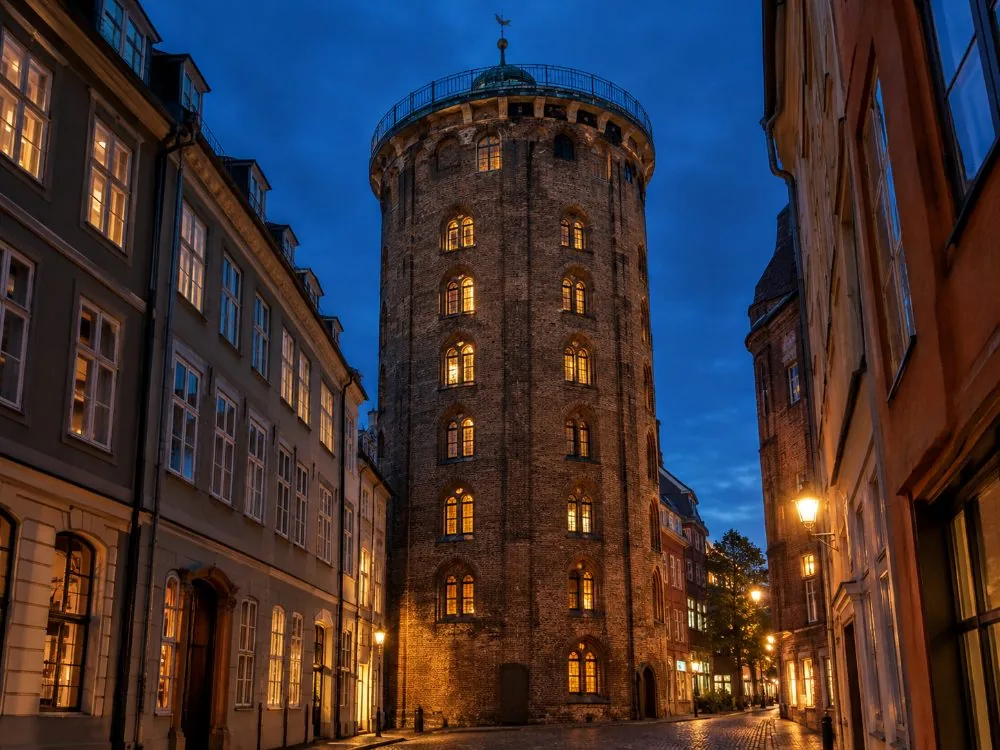 A killing in 1899
Copenhagen: Murder Mystery Hunt by The Round Tower
Those dates don’t work?
The guided ghost walk runs on set evenings and sells out early in October. Browse what else is bookable in Copenhagen — the self-guided murder mysteries you can start whenever you like, and the daytime walks — and pick a date that suits you, with instant confirmation.
Frequently asked questions
Is the nightman’s tour available in English?
No. It is guided in Danish only, like the folk-legends walk. The English options are set out on the English-language page.
Who were the natmænd?
The people who did town sanitation, removed dead animals and assisted the executioner. They were counted uærlige — dishonourable — and excluded from ordinary community life: the longer account.
Where does it start and how long is it?
By the statue of Absalon on Højbro Plads, for 75 minutes. Timings for all six walks are on the duration page.
There are no reviews. Should I worry?
It is a new listing. The same operator runs the English ghost walk, which holds 5.0 across 14 verified bookings: what we can and cannot say about it.